 Geelong Eye Health
What is rosacea?
Rosacea is a common, long-term skin condition. It can cause facial redness, visible blood vessels and pimple-like bumps. The condition involves skin inflammation, blood-vessel changes and a weakened skin barrier. Symptoms tend to flare and settle in cycles.
Because rosacea is long term, care usually focuses on management rather than an overnight fix. A consistent, individualised plan can help control symptoms. Rosacea can also affect the eyelids and eye surface. Dry, gritty, burning, red or light-sensitive eyes therefore deserve attention.
What does rosacea look like?
Rosacea can appear in several ways. More than one pattern may occur at the same time.
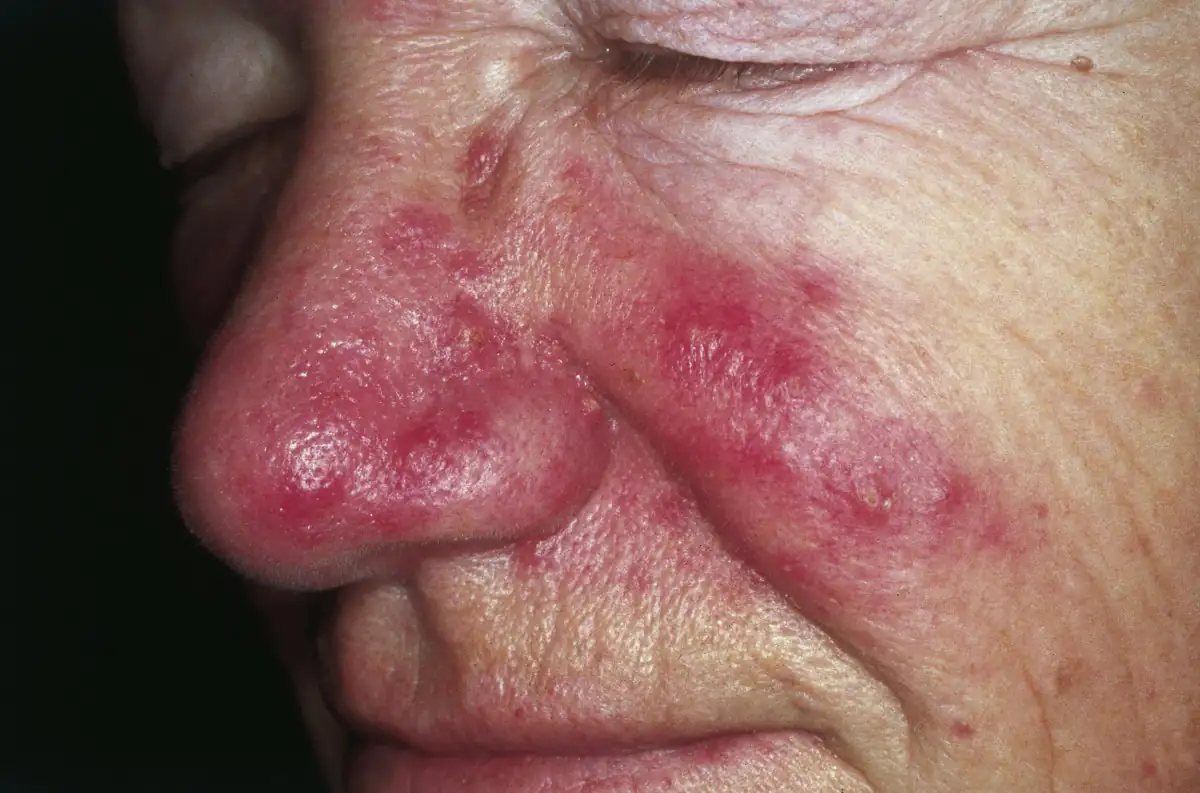
Persistent redness and flushing
Redness across the cheeks, nose, forehead or chin, sometimes with warmth, burning or visible blood vessels.
Photo: M. Sand et al., Head & Face Medicine, via Wikimedia Commons (CC BY 2.0).
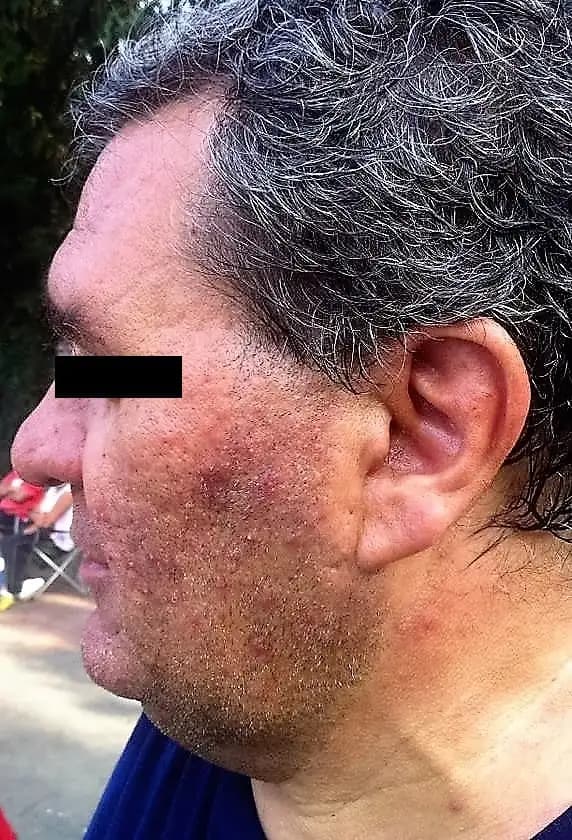
Papules and pustules
Inflamed bumps can appear during flares. Unlike acne, rosacea usually does not involve blackheads.
Photo: Srecan, via Wikimedia Commons (CC BY-SA 4.0).
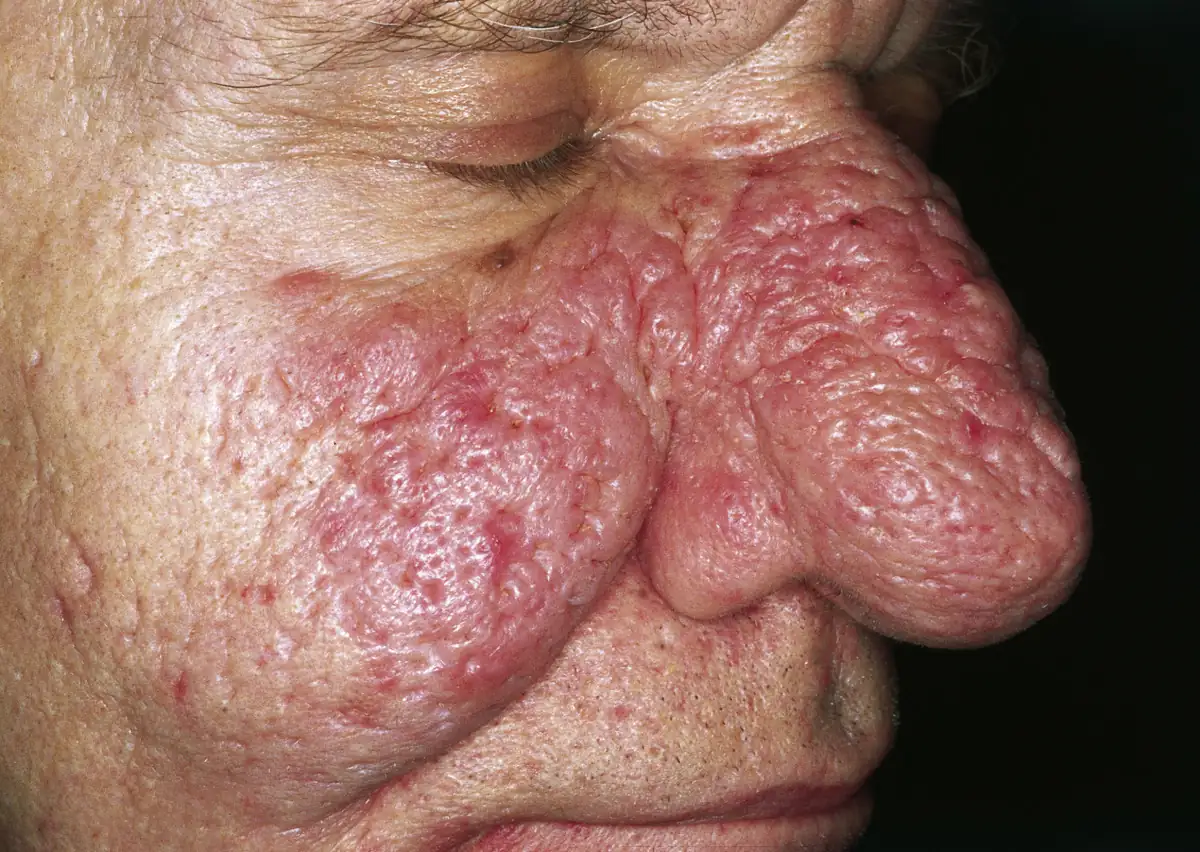
Skin thickening
In longstanding untreated cases, the skin can thicken, most commonly around the nose. This is called rhinophyma.
Photo: M. Sand et al., Head & Face Medicine, via Wikimedia Commons (CC BY 2.0).
What triggers rosacea?
Triggers do not cause rosacea by themselves. They can, however, activate inflammatory and blood-vessel responses in the skin. These responses can worsen symptoms. Common triggers include:
- Sun and UV exposure
- Alcohol, particularly red wine
- Spicy food and hot drinks
- Extreme temperatures, heat and wind
- Stress and high-intensity exercise
- Irritating skincare products containing alcohol, fragrance, witch hazel or menthol
What treatment options are commonly used?
The right plan depends on the type and severity of rosacea. A skin clinician may combine lifestyle changes with skin care. Topical or oral medication and light-based treatment may also form part of the plan.
Skin barrier repair
Skin care often begins with a gentle, fragrance-free cleanser and a barrier-supporting moisturiser. Daily sun protection also matters. Avoiding harsh exfoliants and alcohol-based products may reduce irritation.
Controlling inflammation
The severity and pattern guide prescription treatment. A clinician may recommend a cream or gel, such as azelaic acid, ivermectin or metronidazole. Some patients may instead need oral anti-inflammatory medication, such as low-dose doxycycline.
Laser and light-based treatment
Vascular laser may target persistent redness and visible vessels. LED light therapy may support skin repair and calm inflammation. An appropriate skin clinician can explain whether either option suits you.
Sun protection and lifestyle
Broad-spectrum SPF 30+, shade, hats and trigger awareness are high-value daily habits, especially in Australia’s UV climate.
Eye symptoms and ocular rosacea
Ocular rosacea can cause dry, gritty, burning, itchy, red, watery or light-sensitive eyes. These eye symptoms may be missed when the skin and eyes are assessed separately.
If you have rosacea, recurring eye symptoms may justify a dedicated dry-eye assessment. Leigh Plowman is an optometrist with a clinical interest in dry eye and ocular-surface disease, including ocular rosacea. He works alongside Geelong & Surfcoast Skin as part of the Rosacea Hub.
When to consider an eye appointment
Consider a dry-eye assessment when symptoms keep returning drops only help briefly, screens make your eyes worse, or your eyes are regularly gritty, watery, burning, itchy or light-sensitive. You can also read why eye drops may only provide temporary relief.
Book a Dry Eye Assessment