 Geelong Eye Health
Your tears are way more complex than eye drops
Eye drops are useful, but they cannot reproduce the full complexity of natural tears.
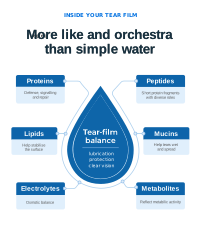
Natural tears are extraordinarily complex. They contain roughly 2,000 components, compared with about a dozen principal ingredients in typical eye drops. Those natural components are like an orchestra: it is not enough for the instruments to be present; they have to work in harmony.
The exact number of components in natural tears depends on what scientists count and how samples are collected. The TFOS DEWS II Tear Film Report reports more than 1,500 identified tear proteins and more than 200 peptides. Tears also contain many lipids, mucins, electrolytes and small metabolites. A 2023 human tear-proteome analysis drew on 1,543 proteins identified in healthy human tears; showing the scale of the tear film's complexity. However, an eye-drop formulation can reproduce only selected properties.
Some tear components lubricate the eye. Others help tears spread and maintain a smooth optical surface. The tear film also supports defence, immune signalling, tissue repair and control of evaporation. A drop may support one of these functions, but it cannot fully replace your own tear film.
“The most important thing is to educate patients about their eyes.”
At Geelong Eye Health, Leigh shows infrared video and photographs on a large screen. Patients can see the findings instead of simply receiving a product name.
Why might eye drops stop helping?
Lubricating drops can provide temporary relief, but they may not address every contributor to dry-eye symptoms. Mild cases may respond well to this simple approach, but when the effect fades quickly, an assessment can investigate what may be disturbing the eye surface.
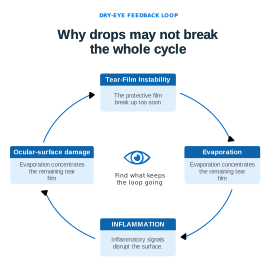
An unstable tear film can increase evaporation and make the tears more concentrated. These changes can contribute to inflammation and surface stress. Surface damage and poor wetting can then make the tear film even less stable.
What can the dry eye symptoms hide?
“Dry eye” can describe many conditions. You may wake up with red eyes or notice tired, weary eyes. Or, you may experience burning, itching, watering, glare, light sensitivity or a foreign-body sensation. Or, you may have a sensation of grittiness or a feeling of something in your eye. Your vision may clear after blinking and then blur again.
Your story is part of the examination
Your history gives the examination context. Timing, screens, airflow, contact lenses, medicines, sleep, hormones, work, health history and previous procedures can all change the picture.
The eyelid oil glands provide clues
Leigh gently assesses the meibomian glands and examines their secretions. Clear, olive-oil-like secretion provides one clue. Little or no expression provides another.
The eyelids may not seal completely overnight
Some people wake with worse symptoms because their eyelids do not close fully during sleep. Leigh assesses eyelid closure as one possible contributor to overnight exposure. Morning symptoms do not always call for another drop.
The surface can be shown, not just described
Leigh displays infrared video and clinical photographs on a large screen. Patients can then see what he sees. The images provide evidence, and Leigh explains how the findings fit together.
Dry-eye symptoms may be something else
Burning, watering, redness, itch, grittiness and fluctuating blur are symptoms, not diagnoses. Allergy, infection, tear-drainage problems and exposure can overlap with or resemble dry eye.
The first plan is not the final word
If management is not working, Leigh returns to the findings. He checks what has changed and how practical the plan has been. Reassessment then guides the next adjustment.
The oil test: what comes from the eyelid glands?
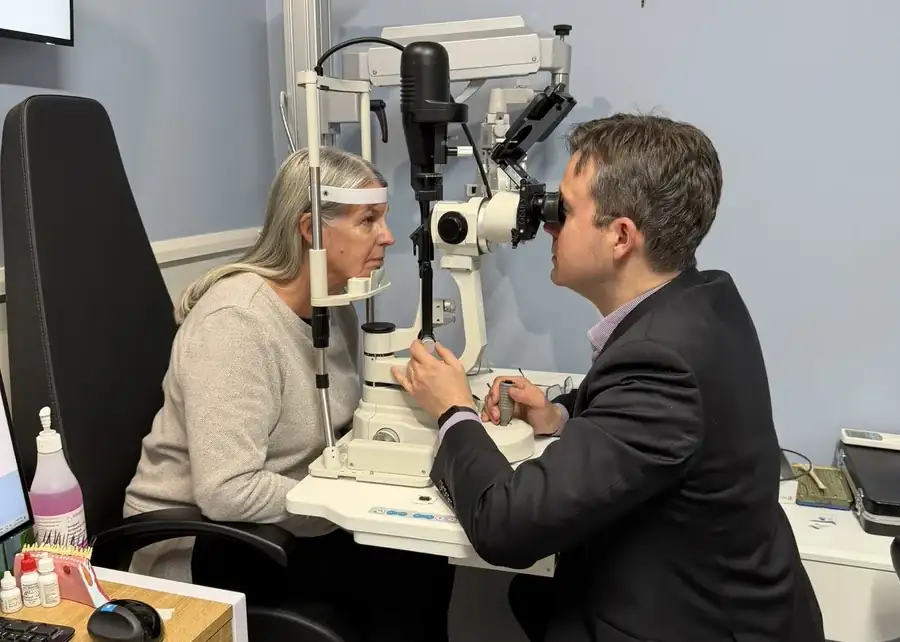
The meibomian glands sit along the eyelids and supply oil to the tear film. If they are not producing enough oil, or if their secretion is of poor quality, the tear film loses stability even when tear volume is adequate.
Tear quantity alone doesn't determine eye comfort. The tear film must also spread evenly, remain stable and protect the surface between blinks. Poor oil-gland function destabilises the tear film and accelerates evaporation.
Meibomian-gland dysfunction can contribute to evaporative dry eye. Reduced tear production and mixed patterns also occur, as discussed in the TFOS DEWS III diagnostic framework.
Morning symptoms may be caused by how you sleep
Incomplete eyelid closure during sleep can contribute to dry-eye symptoms. When the lids do not seal, part of the eye surface may remain exposed overnight. Normal blinking cannot redistribute the tear film during sleep.
To check if the eyelid seal is adequate, we use a small light to check the eyelid seal following the procedure outlined in the TFOS DEWS III Diagnostic Methodology Report .
However, morning redness does not mean that everyone sleeps with their eyes open. The eyelid-seal check is also not a home diagnostic test.
See what the optometrist sees
Imaging becomes useful when someone explains it
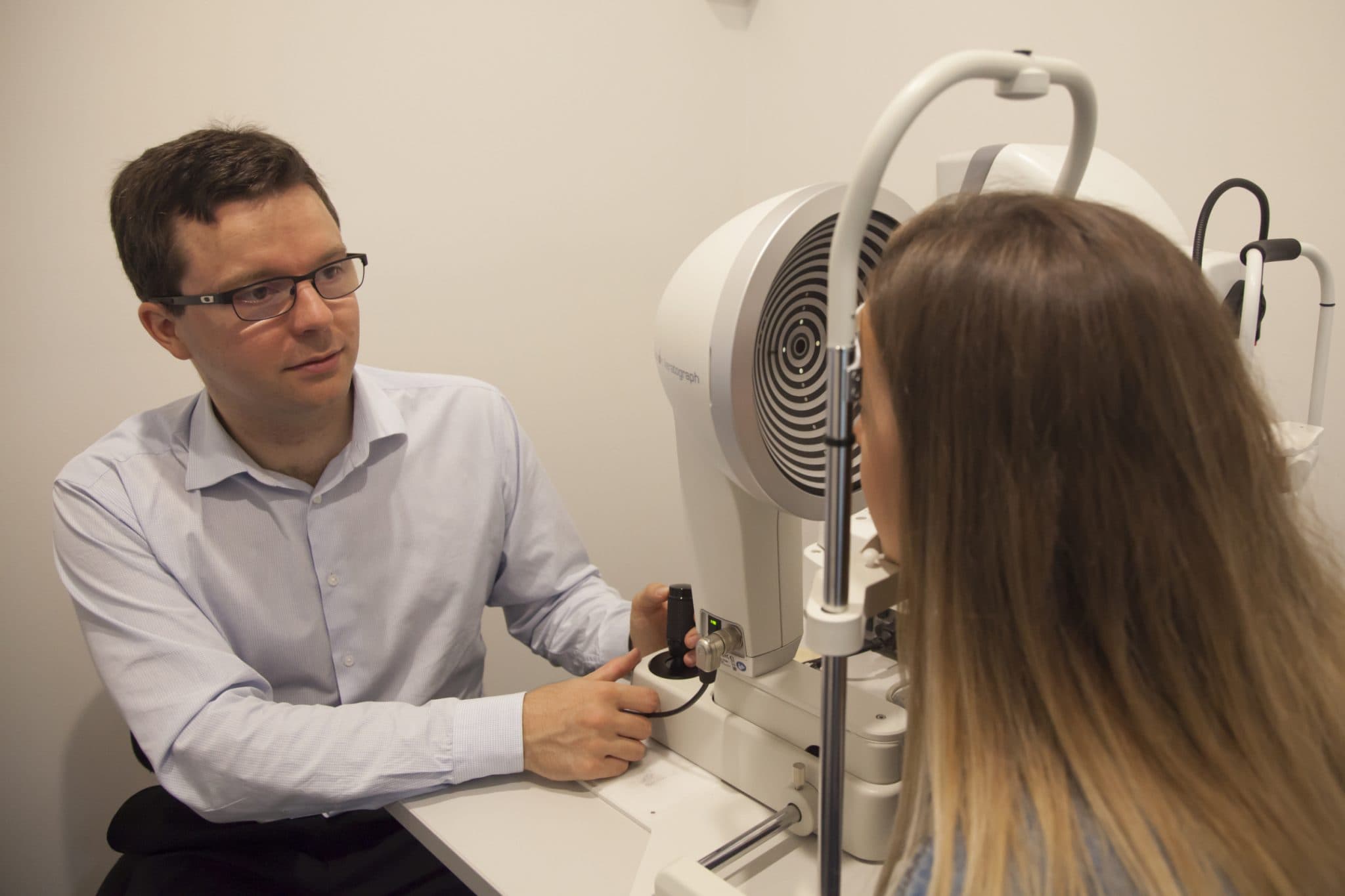
Infrared video and photographs are used to make an invisible-feeling problem visible. The images can document a baseline and support comparison over time.
The machine does not replace judgement. The value lies in linking the image to your history, the examination and a plan you understand.
What happens when the first plan does not work?
When the first plan does not work, we return to the diagnosis and findings. We check what has changed and adjust the plan. The treatment may have been difficult to use consistently. Screens, airflow, sleep or another exposure may have changed. The first explanation may also have been incomplete. The approach we follow is consistent with the approach described in the TFOS DEWS III Management and Therapy Report.
The daily burden
“When their eyes are bad, people talk about thinking about their eyes all the time.”
The aim is management that reduces that burden—not a promise that a chronic condition can never return.
When should you move beyond self-treatment?
When artificial tears have not provided useful relief after about a month, consider an assessment. Reaching for drops every 15–30 minutes, or every hour, also suggests that the root cause needs to be identified and treated.
When you come for an assessment, bring every eye product you use, or clear photos of the labels. Note how often you use each product and how long the effect lasts. Do not stop prescribed eye medicine without speaking to the prescribing clinician.
A sudden change is not routine dry eye
We need to distinguish chronic patterns from going from “nothing yesterday” to marked redness, light sensitivity or blurred vision today. New severe pain, sudden or persistent vision change, injury, chemical exposure or a foreign body also needs urgent professional assessment. If symptoms are severe or sight is suddenly affected, review the clinic's emergency eye-care guidance and seek emergency care rather than waiting for an online booking.
The question to ask before buying the next bottle
Ask: what are we trying to manage? A drop may be useful, but a bottle is not a diagnosis. The answer may require a closer look at the symptom pattern, eye surface, eyelids and oil glands. Exposure and other conditions may also matter. Until those pieces are considered, the reason for short-lived relief may remain unclear.
Persistent symptoms in Geelong?
Geelong Eye Health offers dedicated dry-eye assessments in Geelong West. Bring the drops or products you already use so we can understand what you have tried and what happens next.